
Assistant Director of Community Development

Great fit for seasoned CHW!

Women’s Development Corporation and Housing Opportunities Corporation
Full-time, $82K-$93K
Supervisory Role
Bachelor’s Degree & 5-7 Years Experience Required

Essential Duties:

  • Lead regional Resident Service Coordinators (RSC) in the creation, implementation, and evaluation of community-based strategic plans for each community/property.
  • Supervise the RSC team memebers in all aspects of performance evaluation, improvement, and feedback, for their success and the success of the program.
  • Work with stakeholders to build and implement comprehensive plans around the neighborhood and human service needs.
  • Understand affordable housing and support regional efforts around neighborhood transformation initiatives.
  • Grant writing and oversight.
  • Work with community partners to expand opportunities for residents in HOC managed communities in RI and MA. Support community development and planning efforts for acquisitions and new developments to ensure programs and services connect our HOC communities with real program outcomes.
  • Manage software and data compliance.
  • Interpret data that allows the teams to improve their service delivery model and measurable outcomes.
  • Lead the creation of a strategic agency-wide resident satisfaction survey using multiple
  • Cross-collaboration with Assistant Directors of Property Management and Facilities Management to ensure seamless provision of safe, affordable, and healthy homes.
  • Deliver a collaborative and impactful approach to Community development.  Focus on measurable outcomes for individuals and families in the following categories:Housing stabilizationEconomic mobilityCommunity engagementEmploymentHealth Education 
  •  Develop strategies that have measurable, positive impact for residents of low income and affordable housing. 

Other Responsibilities:

  • Ensure that staff maintain certification through continuing education.
  • Provide for staff, as well as participate in, professional development and networking with local social service agencies.
  • Travel from site to site as needed across RI and SE MA.
  • As directed by supervisor.

Education and Experience:

  • Bachelor degree in social work, human services, or related field required
  • 5-7 years’ work experience providing services with progressive supervisory experience in a Housing/Multi-Family housing environment, or a human services position in a private, non-profit social service organization.
  • Experience inputting, analyzing, and reporting data from resident service managment systems, or client management, or case management systems requied.
  • Willing to obtain Certification as a Resident Service Coordinator (RSC)
  • Experience working with diverse populations
  • Experience raising donor funds for events, tracking expenses, and working within the company accounting procedures.
  • Valid Driver’s License and Insured vehicle. Safe driving record.

Knowledge, Skills, and Competencies:

  • Client focused
  • Intermediate data analysis and reporting skills.
  • Knowledge of mental health, addictions, family issues, multicultural issues, and elderly service delivery system.
  • Ability to interface effectively with various constituencies in a non-judgmental, empathetic manner.
  • Strong verbal communication skills and an ability to diffuse conflict in stressful situations.
  • Self-starter. Primarily works independently, setting own priorities and schedules.
  • Able to work well as a member of a team and resident committees.
  • Able and willing to network and work cooperatively with community agencies.
  • Flexible/Adaptable: ability to work patiently in an environment which can be challenging.
  • Ability to handle emergency situations and pressure due to complexity and time sensitivity.
  • Integrity/Ethics; ability to maintain confidentiality in all aspects of the work environment.
  • Has high standards of professionalism and is able to positively represent WDC/HOC in the community.
  • Good problem-solving skills.
  • Proficiency with Microsoft Office suite and comfort learning property management software.
  • Bilingual, English-Spanish preferred

About the Organization

Statement in Support of Social Justice and Equality

Founded in 1979 by women deeply committed to social justice, Women’s Development Corporation and Housing Opportunities Corporation stand in solidarity with people of color to promote racial equality, condemn violence and support societal change. We pledge to listen to the concerns of the members of our community and share those concerns with one voice, to support and assist efforts that combat injustice, promote equality and provide equal opportunities and to help rebuild trust, confidence and hope in our society.

We believe that safe, sustainable housing is the foundation that enables all individuals and families to become and remain economically stable. In furtherance of this mission, we will continue to devote our energy and resources to the development and management of decent, safe and affordable housing and to join strategic partnerships that seek to improve the health, personal growth and economic self-sufficiency of our residents.

Learn more about our mission here: https://www.wdchoc.org/who-we-are

URGENT: Testify at State Senate Tuesday 4/2 @4pm on CHW Bill!📣

Tomorrow, Tuesday, April 2nd starting at 4pm, a major bill concerning CHWs will be heard at the RI State House.

Currently, CHW services are not billable to private insurance which leaves CHWs mostly funded by grants or Medicaid. This is not sustainable and many grants will end this year! In addition to giving more patients access to vital services, passing this bill (S2606, Sponsored Senator DiMario) would provide more of the job security CHWs deserve! 

There are two urgent ways to advocate!

1. Testify in person!!!! The session will open at 4pm on 4/2 in the Senate Lounge at the RI State House (accessible by busses 50, 55, 56 & 57!) Be heard! General Assembly members will welcome testimony from CHWs and medical providers. You would be able to speak to lawmakers for three minutes!

Logistics: Be there by 4pm and prepare for a long night as the timing of hearings can be unpredictable. Sign-up sheets to testify are usually posted on a table outside the hearing room. Look for Lina Roman, CHWARI’s Bilingual Program Coordinator, near the sign up sheet. Thank you to her and to all CHWs and allies who can make the trip! 
Address is: 82 Smith St, Providence, RI 02903.  Enter your location here to find a bus route. Ample free parking can be found in the RI Dept. of Health Parking Lot after 3 PM.

2. Write an email!  Due by Tuesday 4/2 at 3pm – Write a letter expressing your support. Details on what to include and where to send are on page 2 of this alert compiled by the Washington County Children’s Coalition. 

Let’s pass this important legislation together! 

Read the full details of bill RI S2606.
See Senate Agenda here.
See a thoughtful alert created by the Washington County Children’s Coalition spelling out their reasons for supporting these bills and details on how to advocate.

Case Manager – Housing Stabilization

House of Hope / CDC
Full-time, $23-27 /hr
Bachelors Degree or equivalent experience

GENERAL STATEMENT OF DUTIES

The Housing Stabilization Case Worker provides case management and housing support services to homeless men and women dealing with significant barriers to obtaining and maintaining stable housing.  The Housing Stabilization Case Worker provides case management, including but not limited to, resolution of issues that have led to homelessness, work toward decreasing barriers, life skills coaching and skill building, employment search and/or applying for benefits, and coordination of care with other service providers necessary for maintaining stable housing. As a Housing Frist agency, all services are person-centered and person-directed using a harm reduction, trauma-informed framework to address client needs.

REQUIRED QUALIFICATIONS

  • Bachelor’s Degree in Social Work or Human Services, or equivalent of related education and experience.
  • Patience, creativity, flexibility, compassion, and sensitivity to persons with disabilities and other vulnerable populations in diverse environments.
  • Demonstrated suitability to work with disadvantaged and challenging individuals and families in a diverse environment.
  • Knowledge of community resources such as, but not limited to, physical and mental health services, accessing benefits and employment, addiction, and housing supports.
  • Sound judgement and problem-solving skills including assessing risk factors and recognizing emergency and crisis situations.
  • Knowledge of principles and techniques of interviewing, assessment, counseling and the ability to plan, develop and implement case and treatment plans.
  • Demonstrated ability to work independently and as a team.
  • Excellent communication skills both verbally and in writing.
  • Demonstrated ability to understand and maintain client/worker boundaries.
  • Ability to maintain a high degree of confidentiality.
  • An ability to establish and maintain effective working relationships with clients, community providers, superiors, co-workers, and associates.
  • Ability to structure and manage time, develop work priorities independently, and meet program expectations in regards to documentation standards.
  • Present a neat and professional appearance, display identification as required by the position, and abide by all House of Hope policies and procedures.
  • Possess basic computer skills; including Word, Excel, Internet,and e-mail.
  • Maintain a valid driver’s license and have access to own vehicle for daily travel and Client transport.

ESSENTIAL DUTIES AND RESPONSIBILITIES

  • Engage in relationship building/rapport building with clients.
  • Conduct comprehensive assessments of Clients for the purpose of determining housing needs, housing search capabilities, as well as potential barriers to maintaining housing, with the goal of developing and individualized person-centered case plan of short and long-term goals utilizing harm reduction, trauma-informed, and strength-based approaches.
  • Perform comprehensive client assessments to collect functional, environmental, psycho-social, financial, employment, housing, educational, and health information as appropriate.
  • Provides emotional support, assistance with problem-solving, facilitate referrals to community resources, general advocacy, and crisis intervention activities for clients.
  • Ensure access to resources and services and provide support to assist clients in remaining stably housed and foster independence.
  • Complete appropriate documentation of services provided for the client in file and through HMIS.
  • Accompany clients to appointments for support as needed.
  • Maintain contact through regular home and community visits with clients to provide needed supports, skill building, and life skills coaching to ensure housing stability and increased independence.
  • Engage in landlord communications and advocacy in regard to the client for support to maintain housing if needed.
  • Complete housing applications for other permanent, affordable housing options outside of the program.
  • Obtain all necessary releases and consent forms from clients.
  • Establish and maintain confidential case files for residents and complete progress notes for each client by adhering to documentation standards and any other clinical correspondence as required.
  • Knowledge of community resources, including but not limited to, such as medical, psychological, educational, social services, legal, housing and how to apply and use them effectively.
  • Establish working relationships with representatives in other agencies to support individuals in attaining services such as addiction, mental health, medical care, financial resources, medical benefits, etc. In addition, effectively communicate and articulate the needs of our residents needs to others, both orally and through written correspondence.
  • Ability to recognize emergency and crisis situations, and take action and seek intervention when needed.
  • Provide and coordinate referrals, emergency services, and crisis intervention to residents as needed.
  • Be considerate of each resident’s privacy and confidentiality and respect the racial, religious, cultural and linguistic background of each resident and help to promote the continuance of his or her cultural identity as much as possible.
  • Be a liaison to families, representatives of social services, and other agencies for clients.
  • Participate in supervision, team meetings and actively seek guidance as needed.
  • Attend all housing first training modules and core competency training modules.
  • Attend, prepare, and actively participate in all HOH departmental required trainings and or staff meetings within the building or other training facility. This may include an assignment, preparing an agenda, or engage in problem-solving and procedures.
  • Follow all policies and procedures of House of Hope.

The above is intended to describe the general content and requirements of the job for House of Hope and may vary at times according to department objectives and needs for the performance of the job. It is not to be construed as an exhaustive statement of duties, responsibilities, or requirements.

Salary to commensurate with experience.  Applicants with lived experience of homelessness are encouraged to apply.

Interested parties please submit your resume and cover letter via email to banderson@thehouseofhopecdc.org with the subject line â€śHousing Stabilization Case Manager Application”

Please note due to the volume of resumes that we receive, only those candidates selected for interviews will be contacted.

House of Hope CDC promotes equal opportunity in all aspects of employment.
We are committed to diversity and inclusion in the selection process

Walking Group for Cranston Residents

Walking Group for Cranston Residents!

And a GREAT example of CHWs taking action to meet community needs!  


Announcing, the “Winter Walk & Talk” program in Cranston! Salvatore Nacci, CHW – Older Adults, shares how it got started, “The idea originated within my team here at The OneCranston HEZ. Our Physical Health & Nutrition workgroup had been interested in starting this up and I took it on. It is meant to be a tool for physical activity with a twist of creating a community connection among neighbors and fellow Cranstonians to make friends and discuss their daily lives. It has led to other social activities among the group such as going to Market Basket for lunch or walks around Garden City during the holiday festivities.

We have been doing this for over a year now and have definitely created a bond among us. We usually walk for an hour and a half to two hours 3 days per week,  If you like, come join us for a little walk and talk!” CHWARI is proud to share this news of CHWs doing exactly what they excel at – identifying a health-related need and connecting to resources. What programs can YOU create to meet the needs of YOUR community?  Share them with us!

Contact Sal Nacci with questions. snacci@compcap.org

Federal Medicare to Cover CHW and Peer Support Services!!!!

Big GREAT News for CHWs!

Up until now, some individual states (including RI!) have been setting up their own Medicaid reimbursement for CHW services. Now the federal Centers for Medicare & Medicaid Services (CMS) have finalized policy changes for MediCARE payments effective on or after January 1, 2024 that cover “services involving community health workers, care navigators, and peer support specialists.” This is a game-changer!  

Details are provided on the CMS.gov page: Calendar Year (CY) 2024 Medicare Physician Fee Schedule Final Rule.

From Centers for Medicare & Medicaid Services (CMS):

“Specifically, we are finalizing to pay separately for Community Health Integration, Social Determinants of Health (SDOH) Risk Assessment, and Principal Illness Navigation services to account for resources when clinicians involve certain types of health care support staff such as community health workers, care navigators, and peer support specialists in furnishing medically necessary care. While these types of health care support staff have been able to serve as auxiliary personnel to perform covered services incident to the services of a Medicare-enrolled billing physician or practitioner, the services described by the finalized codes are the first that are specifically designed to describe services involving community health workers, care navigators, and peer support specialists.

NOTE:  This billing will be complex and CHWARI will strive in future months to provide opportunities for learning how to manage the new policy and to make sure CHW voices are heard amidst its roll out. 

CHW Voices for Leadership & Advocacy Group
Speaking of voices, join fellow CHWs on the last Monday of every month to: 
•    Meet other CHWs
•    Contribute to policy discussions
•    Strengthen community connections
•    Join networking groups
•    Keep up to date on CHW news
Next meeting November 27th at 11am.  Learn more here!

Resources for Pregnant People & Substance-Exposed Newborns

This is copied from a Rhode Island Department of Health email sent on June 26, 2023 from communications@notification.health.ri.gov.


June 26, 2023
Resources and Educational Materials to Support Pregnant People Who Use Substances and Substance-Exposed Newborns 
The Rhode Island Department of Health (RIDOH) is working to raise awareness and offer resources to healthcare providers around substance use conditions, particularly as they relate to pregnant and postpartum people and their babies and families. RIDOH wants to ensure that healthcare providers are aware of the impact that various substances can have on their pregnant or postpartum patients and have the resources to support them. Substance use and pregnancy 

Annually in Rhode Island, at least 5% of the approximately 10,000 babies born are exposed to substances that may affect their biopsychosocial health, development, or behavior in the short and/or long term. Substances of exposure can include certain prescribed medications, illicit drugs, alcohol, cannabinoids, and tobacco. 

Resources and supports are available  Parent Support Network of Rhode Island (PSNRI) Through PSNRI’s Healing Mother and Baby Program , pregnant people living with a substance use condition can call or text 401-318-9577 to speak with an English or Spanish-speaking peer recovery coach and access free, confidential help, and support.  

RI MomsPRN This is a free psychiatric telephone consultation resource for healthcare providers who treat pregnant and postpartum people. Healthcare providers can call 401-430-2800 or email RIMomsPRN@CareNE.org Monday through Friday, 8 a.m. to 4 p.m. to be connected to perinatal specialists in real-time.

Family Visiting Program This program provides prenatal support and services [health.us2.list-manage.com] for infants and toddlers, including connecting to other families and available resources. To learn more or get connected, people can call 401-222-5960.

Provider and Patient Education Materials
The following education materials can be ordered free of charge through RIDOH’s Publication Center [health.us2.list-manage.com]: 
Provider guide with background information, screening tools, and referral and supporting resources [health.us2.list-manage.com]. 
Brochures for display in waiting and/or exam rooms for patients to take with them. Available in Cape Verdean [health.us2.list-manage.com], English [health.us2.list-manage.com], Portuguese [health.us2.list-manage.com], and Spanish [health.us2.list-manage.com]. 
Palm cards for display in waiting and/or exam rooms for patients to take with them. Available in English [health.us2.list-manage.com] and Spanish [health.us2.list-manage.com]. [health.us2.list-manage.com]
Posters for display in waiting rooms, bathrooms, and each exam room. Available in English [health.us2.list-manage.com] and Spanish [health.us2.list-manage.com]. 
Safe Sleep flyer to help prenatal providers have conversations with their pregnant patients about ensuring safe sleep practices and environments. Available in English [health.us2.list-manage.com] and Spanish [health.us2.list-manage.com] through RIDOH’s Parents & Caregivers Publication Center [health.us2.list-manage.com].   ORDER MATERIALS NOW [health.us2.list-manage.com]   Contact Margo Katz, RIDOH Substance-Exposed Newborns Program Manager, if you have any questions about these resources.    

Podcast: Public Health Out Loud

Listen to the episode, Healing Mother and Baby: Supporting Pregnant and Parenting People through Recovery [health.us2.list-manage.com].

Guest experts are Katie Gonzalez, a certified peer recovery support specialist supervisor at PSNRI’s Healing Mother and Baby Program [health.us2.list-manage.com], and Margo Katz from the Division of Community Health and Equity at RIDOH. Gonzalez shares her personal story of recovery, as well as some of the success stories she has seen in the Healing Mother and Baby Program.

April 5 Summit Kicks Off RI’s CHW Roadmap Design Project!  

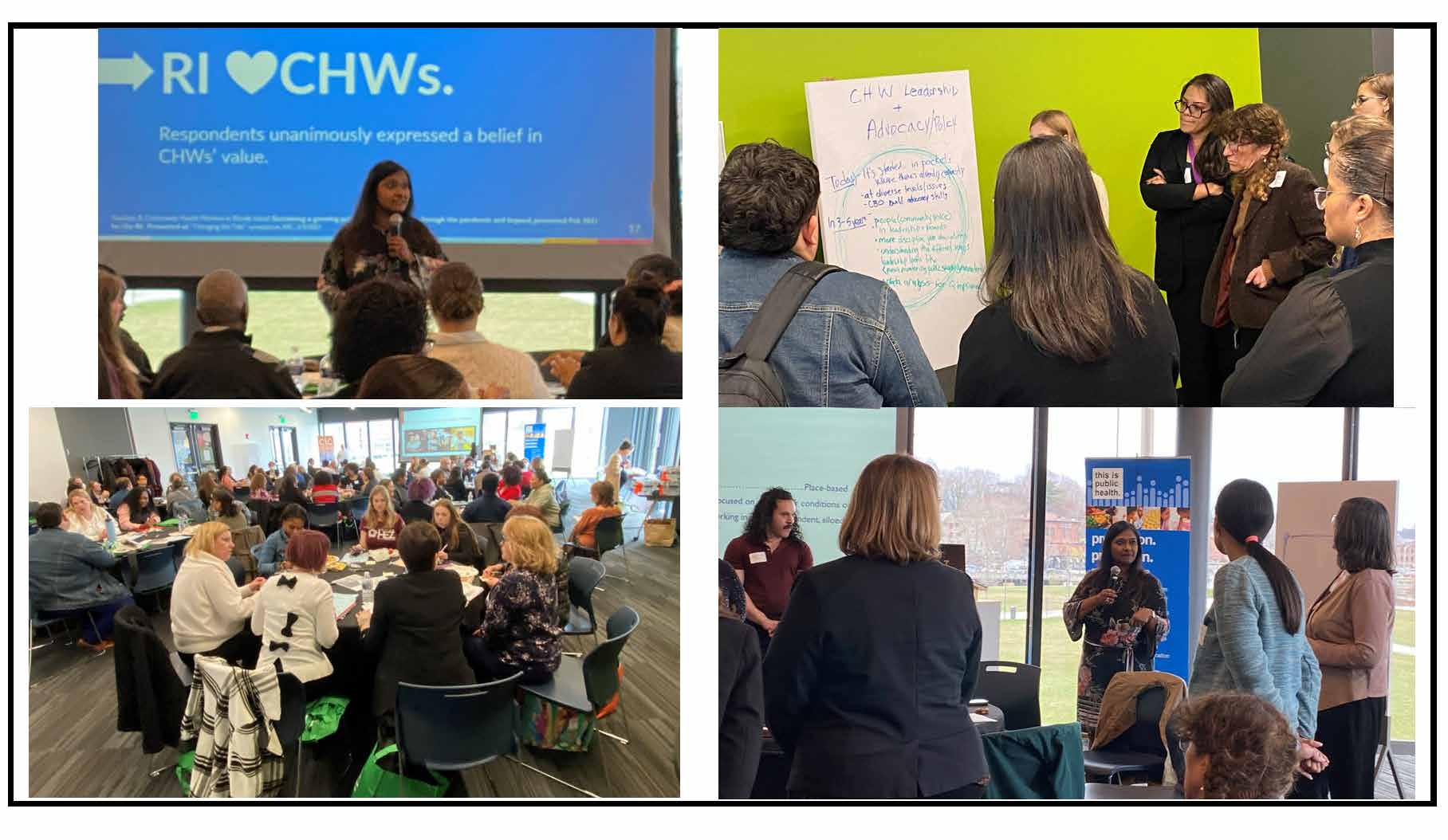
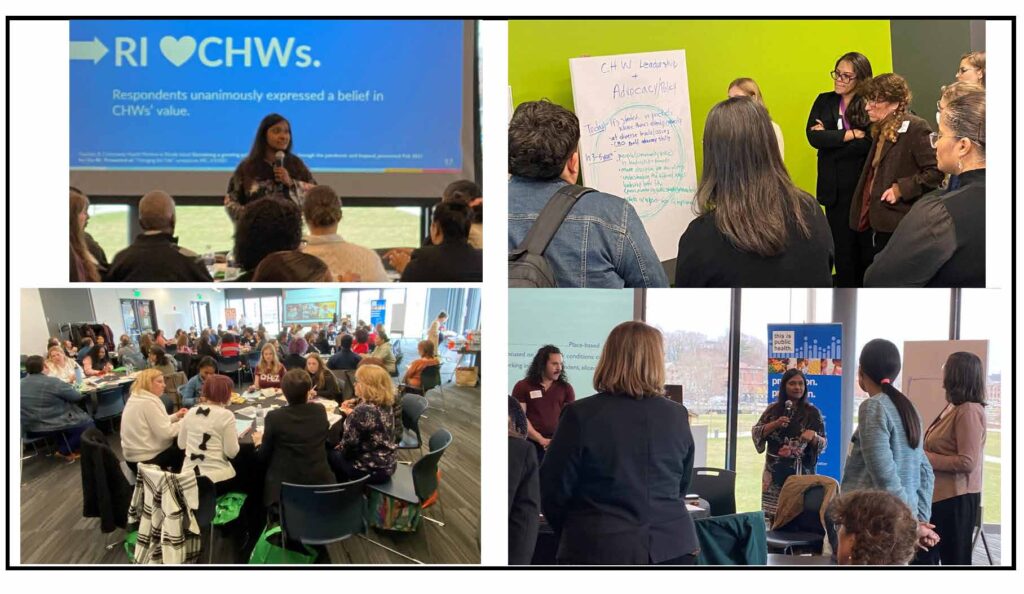
On April 5 at District Hall in Downtown Providence, many CHWs champions and allies came together to collectively envision what’s possible for CHWs in Rhode Island. Of the 91 participants, at least 38 were CHWs! Soma Saha, MD, MS from WE in the World led the activities, with support from the Rhode Island Department of Health and the Care Transformation Collaborative of RI. Many challenging topics were discussed in-depth in large groups and breakout groups over four hours.

Next Steps

This collaborative process will continue over two online Zoom meetings on May 3 (3:30 – 4:30 p.m.) and June 7 (1:30-3 p.m.). 

All CHWs, allies, and policy-makers are invited to participate. All participants from the April 5 CHW Roadmap Summit will automatically receive meeting invitations. (This includes anyone who registered in advance, but was unable to attend.) Members of the RI CHW Strategy Team will also automatically receive meeting invitations.

If you are also interested in attending the next CHW Roadmap Design meetings on May 3 and/or June 7, please email the RIDOH CHW Program at: Geraldine.mcphee.ctr@health.ri.gov.

Thanks to all who participated on April 5!

Providence Vaccination Clinics

Free COVID-19 Bivalent Boosters Offered at Upcoming Community Vaccination Clinics

The Rhode Island Department of Health and Rhode Island schools are offering COVID-19 vaccination clinics to help people get their COVID-19 bivalent boosters. Clinics are open to students and community members. To guarantee an appointment, we recommend registering at the links below.

Vaccines are free. You do not need to have insurance to get your booster dose. If you do have insurance, please bring your card to your appointment. Please note that there are different registration links for people age 5 through 11 and people age 12 or older.

Wednesday, March 22 (3-5 p.m.)
Paul Cuffee Lower School (cafeteria), 459 Promenade St., Providence: 

Tuesday, March 28 (4-6:30 p.m.)
Providence Career and Technical Academy (cafeteria), 41 Fricker St., Providence:

Thursday, March 30 (3-5 p.m.)
Paul Cuffee High School (cafeteria), 544 Elmwood Ave., Providence:

For more information about COVID-19 vaccination and to learn about other COVID-19 vaccination options, please visit c19vaccineri.org or vaccines.gov.

New NIH Structural Racism and Discrimination Funding Opportunity

NIEHS is thrilled to announce our participation in PAR-23-112Addressing the Impact of Structural Racism and Discrimination on Minority Health and Health Disparities. This initiative will support intervention research that addresses structural racism and discrimination (SRD) in order to improve minority health or reduce health disparities.

Please share with your networks!

Please direct inquires to Lindsey Martin (lindsey.martin@nih.gov).

Application Due Dates:

March 24, 2023

October 10, 2023

October 9, 2024

October 9, 2025

NIEHS is interested in applications that are within scope of our 2018-2023 Strategic Plan, that meet the criteria established in this FOA, and focus on intervention research that mitigates or prevents the impacts of environmental exposures on communities due to structural racism and discrimination (SRD). Examples of environmental exposures which are considered of primary interest for NIEHS include but are not limited to: industrial chemicals or manufacturing byproducts, metals, pesticides, herbicides, air pollutants and other inhaled toxicants, particulates, or fibers, fungal, and bacterial or biologically derived toxins. Applicants are strongly encouraged to utilize community engaged research approaches that ensure equity, such as including community partners as part of the research team along with letters of support from community partners. Applications that demonstrate collaborative (i.e., community-academic partnerships) intervention approaches to address the negative health effects of SRD across multiple populations with environmental health disparities will be prioritized. NIEHS is particularly interested in intervention research on a subtype of SRD – environmental racism. For the purposes of this FOA, environmental racism includes the use of racist and discriminatory practices in determining which communities receive health-protective (i.e., green space) or health-harming infrastructure (i.e., industrial complexes). Areas of specific interest to NIEHS include, but are not limited to:

  • Interventions that prevent or mitigate single or combined environmental exposures disproportionately affecting the health of one or more communities impacted by environmental racism
  • Interventions that address the disproportionate health impacts of exposures due to climate change, extreme weather and natural or human caused disasters on communities affected by environmental racism
  • Interventions that prevent or mitigate disproportionate exposures in the built environment (e.g., mold or lead in housing, lack of greenspace) attributed to systemic neighborhood disinvestment
  • Interventions that address the role of environmental racism in occupational exposures
  • Interventions that promote the resiliency of communities experiencing environmental racism

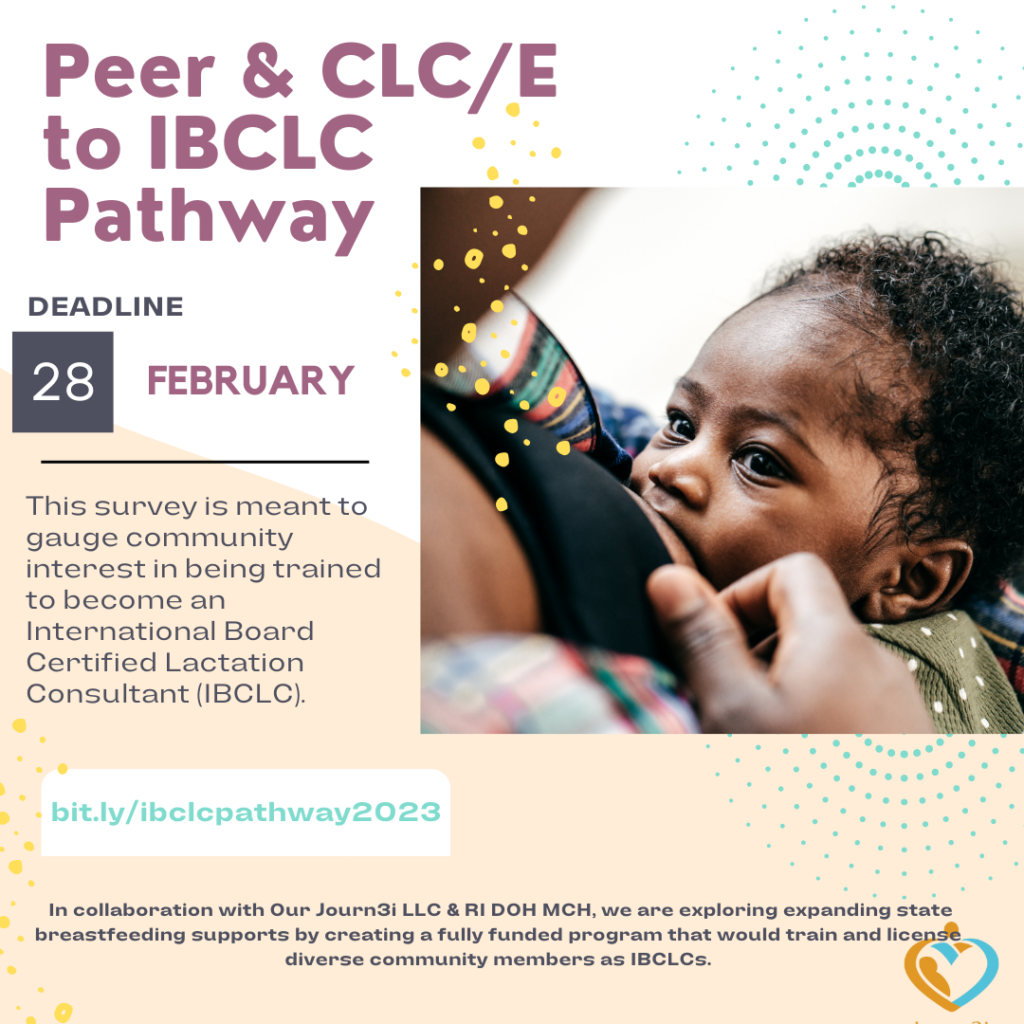
Lactation Consultant Research Survey

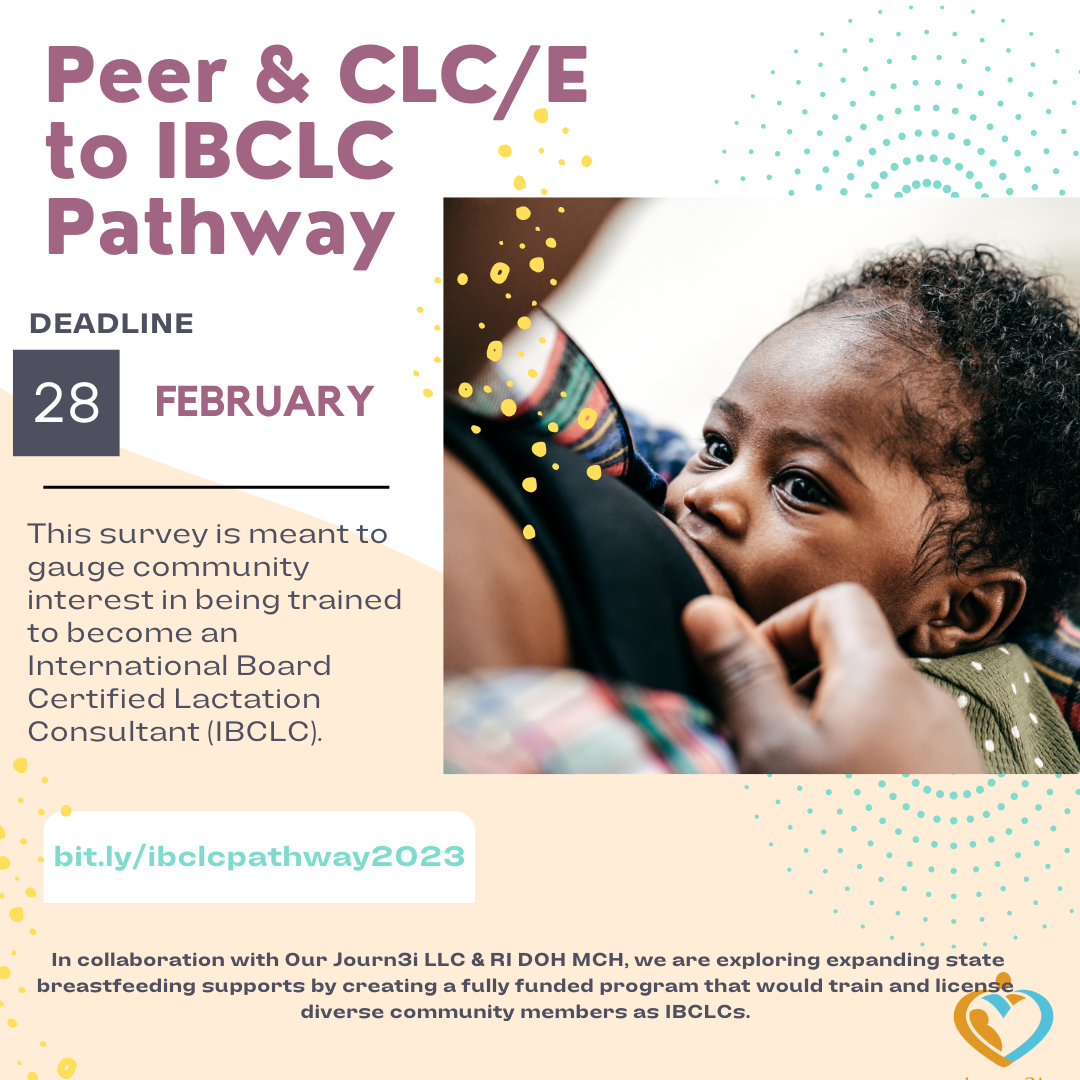
CLC to IBCLC Research Survey

This survey is meant to gauge community interest in being trained to become an International Board Certified Lactation Consultant (IBCLC). In collaboration with Our Journ3i LLC & RI DOH MCH, we are exploring expanding state breastfeeding supports by creating a fully funded program that would train and license diverse community members as IBCLCs. Your input will assist us in the evaluation of the potential expansion of this workforce in RI.

Deadline to complete survey February 28, 2023.